
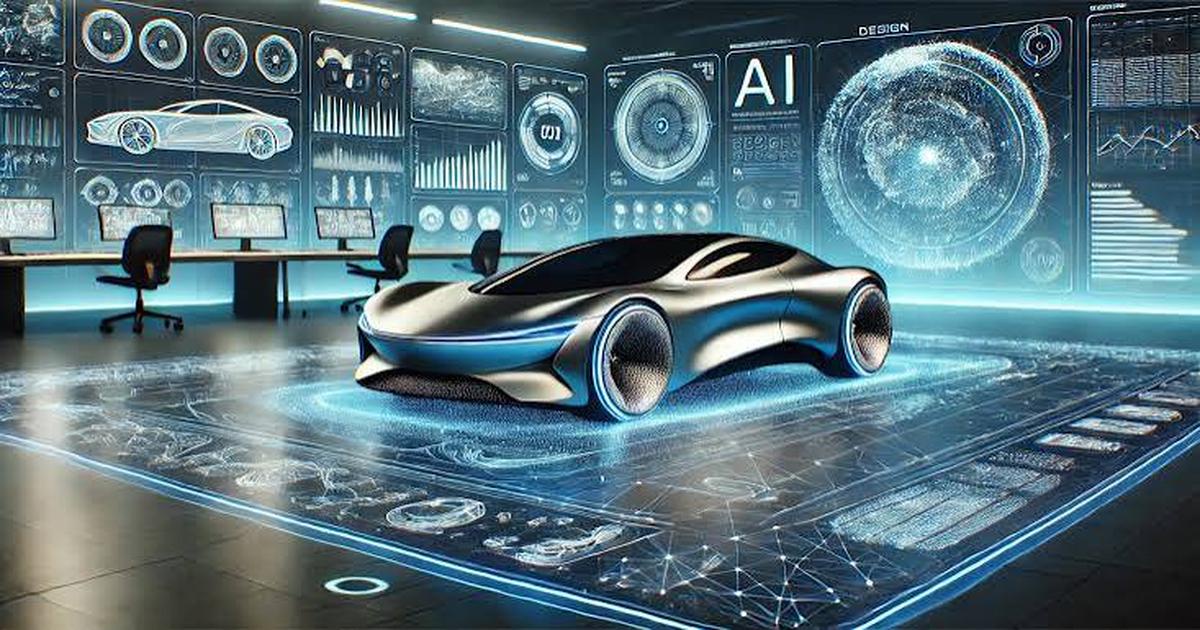
Artificial intelligence is rapidly transforming the automotive industry, and self-driving cars are no longer just a concept from science fiction movies. With companies like Tesla, Waymo, and several other tech giants investing billions into autonomous vehicle technology, the question isn't whether AI will drive our cars — it's how soon and how effectively it will happen.
How Does AI Power Self-Driving Cars?
AI-driven vehicles rely on a combination of sensors, cameras, radar, and lidar systems that work together to create a real-time map of the car's surroundings. Machine learning algorithms process this massive amount of data in milliseconds, making decisions about steering, braking, acceleration, and lane changes — all without human intervention.
Deep neural networks are trained on millions of miles of driving data, allowing these systems to recognize pedestrians, traffic signals, road signs, and unexpected obstacles. The more data these systems process, the smarter and safer they become over time.
Key Technologies Behind AI-Driven Cars
Computer Vision: AI uses advanced image recognition to interpret what cameras see around the vehicle. This technology can distinguish between a cyclist, a parked car, a traffic cone, and a pedestrian crossing the street.
Sensor Fusion: By combining data from multiple sensors — cameras, radar, lidar, and ultrasonic sensors — AI creates a comprehensive 3D understanding of the environment that is far more accurate than any single sensor alone.
Natural Language Processing: Future AI cars will understand voice commands naturally, allowing passengers to communicate their destination, preferences, and comfort settings through simple conversation.
Predictive Analytics: AI doesn't just react to current conditions — it predicts what other drivers, pedestrians, and cyclists might do next, enabling proactive rather than reactive driving decisions.
Levels of Autonomous Driving
The Society of Automotive Engineers defines six levels of driving automation, from Level 0 (no automation) to Level 5 (full automation). Currently, most commercial vehicles operate between Level 2 and Level 3, where the car can handle certain driving tasks but still requires human supervision. The goal is to reach Level 4 and Level 5, where the vehicle can handle all driving scenarios independently.
Benefits of AI-Driven Cars
The potential benefits are enormous. Human error causes approximately 94% of all traffic accidents, according to the National Highway Traffic Safety Administration. AI-driven cars could dramatically reduce accidents, save thousands of lives each year, and make roads significantly safer for everyone.
Beyond safety, autonomous vehicles promise reduced traffic congestion through optimized routing, lower fuel consumption through efficient driving patterns, increased mobility for elderly and disabled individuals, and the freedom to use travel time productively instead of focusing on driving.
Challenges That Remain
Despite remarkable progress, several challenges need to be addressed before fully autonomous cars become mainstream. These include handling unpredictable weather conditions like heavy rain and snow, navigating complex urban environments with construction zones and unmarked roads, establishing clear legal frameworks and liability rules, building public trust in the technology, and ensuring cybersecurity against potential hacking threats.
What Does the Future Look Like?
Experts predict that by 2030, autonomous vehicles will be a common sight on highways and in major cities. AI will continue to evolve, learning from every mile driven and every scenario encountered. The integration of 5G connectivity will enable cars to communicate with each other and with smart city infrastructure in real time, creating an interconnected transportation ecosystem that is safer, cleaner, and more efficient than anything we have today.
The future of driving isn't just about removing the human from behind the wheel — it's about creating an intelligent transportation network that benefits everyone. And with AI advancing at its current pace, that future is closer than most people realize.